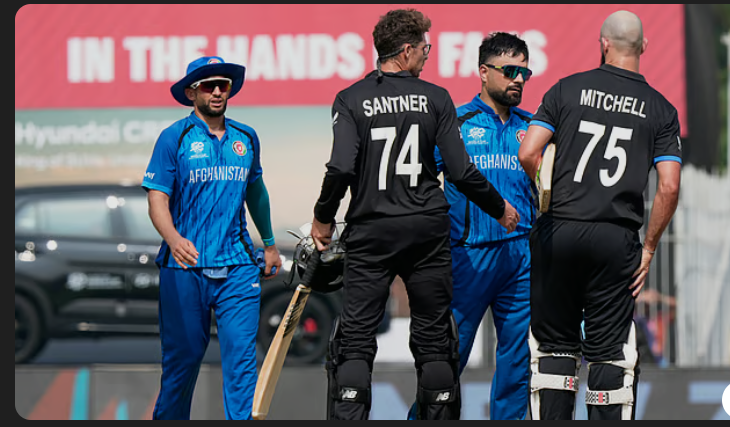
The New Zealand National Cricket Team versus Afghanistan National Cricket Team timeline reflects a modern cricket rivalry shaped by contrast, growth, and tactical evolution. From New Zealand’s disciplined dominance to Afghanistan’s rapid rise through spin mastery and fearless batting, every encounter highlights shifting momentum, emerging stars, and competitive ICC stage battles.
Recent Afghanistan vs New Zealand Timeline
Tournament
Venue
Date
Toss
Afghanistan Score
New Zealand Score
Result
Series
Player of the Match
T20 World Cup
Chennai
Feb 8, 2026
New Zealand (field)
182/6 (20 ov)
183/5 (17.5 ov)
New Zealand won by 5 wickets
T20 World Cup 2026
Tim Seifert (NZ)
Champions Trophy
Karachi
Feb 16, 2025
Afghanistan (bat)
—
—
Match Abandoned (Warm-up)
Champions Trophy 2025
N/A
Only Test
Greater Noida
Sep 9-13, 2024
No Toss
—
—
Match Abandoned (Rain)
Bilateral Test
N/A
T20 World Cup
Providence
Jun 7, 2024
New Zealand (field)
159/6 (20 ov)
75 (15.2 ov)
Afghanistan won by 84 runs
T20 World Cup 2024
Rahmanullah Gurbaz (AFG)
ODI World Cup
Chennai
Oct 18, 2023
Afghanistan (field)
139 (34.4 ov)
288/6 (50 ov)
New Zealand won by 149 runs
ODI World Cup 2023
Glenn Phillips (NZ)
T20 World Cup
Melbourne
Oct 26, 2022
No Toss
—
—
Match Abandoned (Rain)
T20 World Cup 2022
N/A
T20 World Cup
Abu Dhabi
Nov 7, 2021
Afghanistan (bat)
124/8 (20 ov)
125/2 (18.1 ov)
New Zealand won by 8 wickets
T20 World Cup 2021
Trent Boult (NZ)
Head-to-Head Record by Format
Format
Total Matches
New Zealand Wins
Afghanistan Wins
No Result / Tie
T20 Internationals
3
2
1
0
One Day Internationals
3
3
0
0
Test Matches
1
0
0
1
Combined Overall
7
5
1
1
ICC Tournament Match History
Tournament
Format
Date
Winner
Margin
Player of the Match
T20 World Cup
T20I
Feb 8, 2026
New Zealand
5 Wickets
Tim Seifert (NZ)
T20 World Cup
T20I
Jun 7, 2024
Afghanistan
84 Runs
Rahmanullah Gurbaz (AFG)
ODI World Cup
ODI
Oct 18, 2023
New Zealand
149 Runs
Glenn Phillips (NZ)
T20 World Cup
T20I
Nov 7, 2021
New Zealand
8 Wickets
Trent Boult (NZ)
ODI World Cup
ODI
Jun 8, 2019
New Zealand
7 Wickets
Jimmy Neesham (NZ)
ODI World Cup
ODI
Mar 8, 2015
New Zealand
6 Wickets
Daniel Vettori (NZ)
Top Batting Performances
Player
Team
Runs
Format
Match Date
Highlight
Rahmanullah Gurbaz
AFG
80 (56)
T20I
Jun 7, 2024
Highest individual T20 score in this rivalry
Kane Williamson
NZ
79* (136)
ODI
Jun 8, 2019
Match-winning captain’s knock in 2019 WC
Tim Seifert
NZ
65 (42)
T20I
Feb 8, 2026
Drove NZ to their highest T20 WC chase
Gulbadin Naib
AFG
63 (35)
T20I
Feb 8, 2026
Explosive fifty that set a competitive total
Najibullah Zadran
AFG
73 (48)
T20I
Nov 7, 2021
Lone resistance in a tough World Cup loss
Top Bowling Performances
Player
Team
Figures
Format
Match Date
Highlight
Fazalhaq Farooqi
AFG
4/17
T20I
Jun 7, 2024
Demolished the NZ top order in historic win
James Neesham
NZ
5/31
ODI
Jun 8, 2019
Career-best figures in a World Cup match
Rashid Khan
AFG
4/17
T20I
Jun 7, 2024
Joint-best T20 figures by an AFG captain
Trent Boult
NZ
3/17
T20I
Nov 7, 2021
Clinical spell that secured a semi-final spot
Mujeeb Ur Rahman
AFG
2/25
T20I
Feb 8, 2026
Rocked NZ early with two Powerplay wickets
First Encounters in ICC Events
The first ICC encounters between Afghanistan and New Zealand highlighted a clear gap in experience but also marked Afghanistan’s arrival on the global stage. New Zealand entered with tactical discipline, world-class seam bowling, and calm chase management, while Afghanistan relied on fearless intent and emerging spin strength. In these early meetings, New Zealand controlled key phases, especially powerplays and middle overs, restricting Afghanistan’s scoring opportunities. However, Afghanistan’s spinners occasionally troubled the Kiwi middle order, showing flashes of competitive potential. These matches laid the foundation of respect between both sides and began a rivalry defined by discipline versus raw ambition.
Match
Event
Winner
Afghanistan Top Performer
New Zealand Top Performer
Highest Score
Best Bowling
Key Moment
AFG vs NZ
ICC Cricket World Cup Clash
New Zealand
Rahmat Shah (42 runs, fighting innings)
Kane Williamson (calm 70+ anchor innings)
Williamson 70+
Trent Boult (early swing burst spell)
Early wickets in powerplay broke Afghan momentum
AFG vs NZ
ICC Group Stage Encounter
New Zealand
Mohammad Nabi (all-round resistance)
Martin Guptill (aggressive start)
Guptill 80+
Mitchell Santner (middle overs control)
Spin choke in middle overs sealed match control
Spin vs Pace Tactical Battle
The tactical battle between Afghanistan’s spin-heavy attack and New Zealand’s world-class pace unit became the defining chess match of this rivalry. Afghanistan relied on mystery spin, flight, and middle-over pressure led by Rashid Khan and Mohammad Nabi, aiming to break partnerships and slow scoring. New Zealand countered with disciplined seam bowling, exploiting swing in powerplays and hard lengths to target Afghan top order weaknesses. On slower pitches, Afghanistan’s spinners briefly controlled the game, but New Zealand’s experience in rotating strike often neutralized pressure. This contrast of styles created a fascinating balance of control versus aggression across ICC encounter
Phase
Afghanistan Strategy
New Zealand Strategy
Key Player Impact (AFG)
Key Player Impact (NZ)
Match Turning Point
Tactical Winner
Powerplay
Survival and cautious starts
Aggressive swing attack
Rahmanullah Gurbaz (slow starts under pressure)
Trent Boult (early wickets burst)
Early top-order collapse
New Zealand
Middle Overs
Spin choke with Rashid and Nabi
Strike rotation and patience
Rashid Khan (tight overs, wickets)
Kane Williamson (anchor control)
Breaking partnerships
Balanced
Death Overs
Risk-based hitting
Yorkers and slower balls
Najibullah Zadran (late acceleration)
Tim Southee (death over precision)
Controlled finish execution
New Zealand
Afghanistan’s Fightback Spirit Emerges
Afghanistan’s fightback spirit against New Zealand marked a turning point in their cricketing identity, transforming them from passive competitors into fearless challengers. In key encounters, their middle order showed resilience under pressure, while spin bowlers like Rashid Khan and Mohammad Nabi began controlling crucial phases. Even when early wickets fell, Afghanistan responded with intent-driven partnerships and improved strike rotation. Their bowling unit also tightened lines, forcing New Zealand into slower scoring periods. Though victories remained rare, Afghanistan consistently pushed matches deeper, earning respect through courage, discipline, and visible growth against a top tier opposition.
Match Phase
Afghanistan Response Pattern
Key Strength Developed
Standout Player
Impact Moment vs New Zealand
Best Performance Indicator
Result Influence
Powerplay Recovery
Early collapse recovery attempts
Improved batting resilience
Rahmanullah Gurbaz
Stabilizing after early wickets
30+ run opening stands
Reduced early damage
Middle Overs Fightback
Spin control and partnerships
Tactical batting maturity
Rashid Khan
Breaking NZ partnerships
2–3 wicket spells
Momentum shift attempts
Lower Order Resistance
Late overs acceleration
Finishing capability
Mohammad Nabi
40+ run cameos under pressure
7+ run rate bursts
Competitive totals
Bowling Pressure Phase
Tight overs and dot balls
Disciplined attack strategy
Mujeeb Ur Rahman
Restricting NZ scoring flow
Economy under 5.5
Match pressure building
New Zealand’s Tactical Consistency and Experience Edge
New Zealand’s dominance over Afghanistan has largely been driven by tactical consistency, calm decision making, and deep international experience. Their ability to control pressure moments separates them in this rivalry, especially in ICC events. The top order builds steady platforms while the middle order rotates strike efficiently, preventing Afghanistan’s spinners from settling. With the ball, New Zealand’s seam attack maintains disciplined lines and lengths, forcing errors in key phases. Their fielding standards and game awareness consistently convert tight situations into wins, making them one of the most structured and reliable sides in modern cricket.
Phase
New Zealand Strategy
Key Strength
Standout Player
Impact vs Afghanistan
Best Performance Indicator
Match Outcome Influence
Powerplay Control
Early swing attack + stable batting starts
Fast bowling discipline
Trent Boult
Early Afghan wickets
2–3 wicket opening spells
Strong early dominance
Middle Overs Management
Strike rotation + partnership building
Game control under pressure
Kane Williamson
Neutralizing spin threat
50+ anchor innings
Stabilized innings flow
Bowling Discipline
Tight seam + variation
Economy control
Tim Southee
Restricting scoring rate
Economy under 5
Built pressure phases
Fielding Excellence
Sharp catches + run-outs
High efficiency field unit
Glenn Phillips
Cutting boundary options
Direct run-out moments
Match-turning fielding impact
Conclusion
The New Zealand versus Afghanistan cricket timeline shows a clear evolution from one-sided contests to increasingly competitive clashes. New Zealand’s experience and structure often prevail, but Afghanistan’s rising confidence and skill have narrowed the gap. This rivalry now stands as a symbol of growth, resilience, and modern cricket transformation.