
Table of Contents
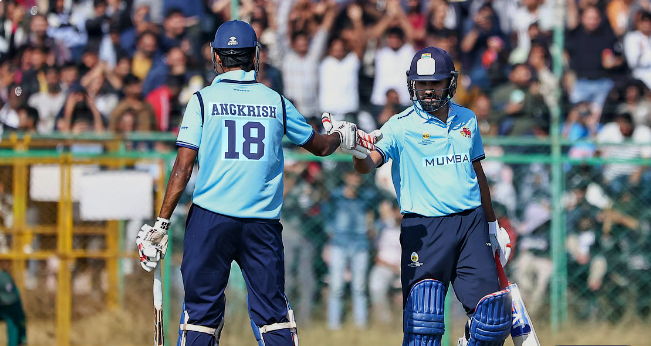
The Sikkim cricket team vs Mumbai cricket team rivalry is part of India’s domestic cricket landscape, bringing together a developing side from the Northeast and one of the country’s most successful cricket teams. Their meetings in limited-overs tournaments have provided opportunities to compare batting strength, bowling depth, and experience at the domestic level.
Mumbai have traditionally been known for producing international cricketers and winning major domestic competitions. Sikkim, meanwhile, have continued to develop their cricketing structure and compete against established state teams.
This article covers their documented head-to-head results, key scorecards, batting and bowling performances, tournament history, and the major factors that influence matches between the two sides.
Sikkim vs Mumbai Head-to-Head Stats
The two teams have met in domestic limited-overs competitions, including the Vijay Hazare Trophy and Syed Mushtaq Ali Trophy. Their documented encounters have generally favoured Mumbai.
Head-to-head results
| Date | Tournament | Sikkim score | Mumbai score | Result |
|---|---|---|---|---|
| 21 February 2019 | Syed Mushtaq Ali Trophy | 104/7 | 258/4 | Mumbai won by 154 runs |
| 23 November 2023 | Vijay Hazare Trophy | 89 all out | 90/3 | Mumbai won by 7 wickets |
| 24 December 2025 | Vijay Hazare Trophy | 236/7 | 237/2 | Mumbai won by 8 wickets |
These are documented meetings, not a claim that the table represents every fixture between the teams across all competitions.
The results show Mumbai’s advantage in the recorded matches. Their 2019 T20 victory was particularly emphatic, while their 2023 List A win came after restricting Sikkim to fewer than 100 runs. In December 2025, Sikkim posted a much more competitive total, but Mumbai completed the chase comfortably.
Latest Sikkim vs Mumbai Match Scorecard
The latest match in the documented head-to-head results above took place on 24 December 2025 during the Vijay Hazare Trophy. The game was played at Sawai Mansingh Stadium in Jaipur.
Match summary
| Match detail | Information |
|---|---|
| Tournament | Vijay Hazare Trophy 2025–26 |
| Format | List A, 50 overs |
| Venue | Sawai Mansingh Stadium, Jaipur |
| Toss | Sikkim won and elected to bat |
| Sikkim score | 236/7 in 50 overs |
| Mumbai score | 237/2 in 30.3 overs |
| Result | Mumbai won by 8 wickets |
| Player of the Match | Rohit Sharma |
Sikkim innings: 236/7
Sikkim chose to bat first and reached 236/7 in their allotted 50 overs. Their innings included a valuable contribution from Ashish Thapa, who scored 79 runs from 87 balls. His innings helped Sikkim build a respectable total against an experienced Mumbai bowling attack.
Melu Kranthi Kumar added 34 runs, while Robin Limboo remained unbeaten on 31. Sikkim had enough contributions to avoid a collapse, although Mumbai’s bowlers kept the total within reach.
| Sikkim batter | Runs | Balls |
|---|---|---|
| K Sai Satwik | 34 | 55 |
| Amit Rajera | 0 | 2 |
| Ashish Thapa | 79 | 87 |
| Melu Kranthi Kumar | 34 | 52 |
| Gurinder Singh | 17 | 35 |
| Robin Limboo | 31* | 41 |
| Palzor Tamang | 10 | 15 |
| Ankur Malik | 9 | 11 |
| Lee Yong Lepcha | 1* | 2 |
The table highlights selected batting figures from the scorecard; the total includes extras and the remaining innings details.
Mumbai innings: 237/2
Mumbai chased the target with considerable time remaining, reaching 237/2 in 30.3 overs. Their batting depth and ability to score quickly made the chase much more straightforward than Sikkim would have hoped.
Rohit Sharma produced the standout performance of the match, scoring 155 runs from 94 balls according to the match report. His innings gave Mumbai a commanding position in the chase. The team needed only two wickets to complete the victory, winning by eight wickets.
The result illustrated Mumbai’s ability to turn a reasonable opposition total into a comfortable win through aggressive batting and strong partnerships.
Key Batting Stats: Sikkim vs Mumbai
Batting performance is one of the clearest ways to understand the difference between the teams in their documented encounters.
Sikkim’s leading contributors
Sikkim’s batting has shown improvement in the more recent meeting. Their 236-run total in December 2025 was considerably stronger than their 89 all out in the 2023 Vijay Hazare Trophy fixture.
Key contributors included:
- Ashish Thapa: His 79-run innings was the foundation of Sikkim’s 2025 total.
- K Sai Satwik: He scored 34 runs, helping Sikkim establish a platform.
- Melu Kranthi Kumar: His 34 runs added stability in the middle order.
- Robin Limboo: His unbeaten 31 helped Sikkim finish with a competitive score.
These contributions demonstrate the importance of partnerships and batting depth when facing a side with Mumbai’s experience.
Mumbai’s leading contributors
Mumbai’s batting strength has been a major factor in the head-to-head results.
- Rohit Sharma: His reported 155-run innings in the 2025 match was the standout batting performance.
- Experienced top-order batters: Mumbai have often been able to build partnerships early in an innings and maintain a high scoring rate.
- Middle-order depth: Their broader squad provides options to accelerate if early wickets fall.
In the 2019 Syed Mushtaq Ali Trophy encounter, Mumbai scored 258/4 and won by 154 runs. That result demonstrated their ability to dominate a T20 match through sustained scoring.
Bowling Stats and Match Impact
Bowling performances have also played an important role in this matchup. Mumbai’s ability to restrict Sikkim’s scoring has helped them maintain control in the documented meetings.
Mumbai bowling performances
Mumbai’s bowlers restricted Sikkim to 89 all out in the November 2023 Vijay Hazare Trophy match. The low total gave Mumbai a small target and allowed them to win by seven wickets.
In the 2025 meeting, Sikkim reached 236/7, showing that they were better able to withstand the bowling attack. Mumbai nevertheless kept the score manageable enough for their batters to complete the chase comfortably.
Mumbai’s general strengths include:
- A wider pool of experienced domestic bowlers.
- Options for both pace and spin.
- The ability to adjust bowling plans to the format and pitch.
- Experience defending totals and bowling during high-pressure phases.
Sikkim bowling performances
Sikkim faced a difficult challenge against Mumbai’s aggressive batting in the 2025 match. The target was chased in 30.3 overs, so their bowlers had limited opportunity to build pressure throughout the innings.
To compete more effectively in future encounters, Sikkim need to focus on early wickets, economical bowling in the powerplay, and preventing batters from building long partnerships.
A strong start with the ball can make a substantial difference, particularly in limited-overs cricket, where a fast-scoring top order can quickly shift the balance of a match.
Sikkim vs Mumbai in the Vijay Hazare Trophy
The Vijay Hazare Trophy is India’s domestic List A competition, played in the 50-over format. It gives state and regional teams an opportunity to compete for domestic honours and helps selectors assess players for higher levels of cricket.
Mumbai have traditionally been one of the leading sides in Indian domestic cricket. Their experience in high-pressure matches and the depth of their player pool make them difficult opponents.
Sikkim’s participation in the tournament is valuable for developing players and improving the team’s competitiveness. Matches against established teams can expose weaknesses, but they also provide important experience.
The 2025 encounter showed progress in Sikkim’s batting output. Their total of 236/7 was a significant improvement on the 89 all out recorded in the 2023 meeting. However, Mumbai’s successful chase showed that Sikkim still had work to do in restricting a strong batting lineup.
Sikkim vs Mumbai in the Syed Mushtaq Ali Trophy
The Syed Mushtaq Ali Trophy is India’s domestic T20 competition. Matches in this format are often decided by powerplay performance, boundary hitting, bowling variations, and execution during the final overs.
Their documented 2019 meeting produced a clear result. Mumbai scored 258/4, while Sikkim finished on 104/7, giving Mumbai a 154-run victory.
The match highlights how quickly a T20 game can become one-sided when one team posts a large total and the other struggles to maintain the required scoring rate.
For Sikkim, success in future T20 encounters will depend on building partnerships, scoring boundaries consistently, and avoiding clusters of wickets. Mumbai’s experience in this format gives them an advantage, but a strong start can make any limited-overs match more competitive.
Why Mumbai Have the Advantage
Several factors help explain Mumbai’s strong results against Sikkim.
Greater domestic experience
Mumbai have a long record of competing for major domestic trophies. Their players regularly encounter demanding situations, including knockout matches and games in which the pressure of defending a target or chasing a large score is high.
Stronger batting depth
The 2025 chase showed Mumbai’s ability to complete a target with only two wickets down. A deep batting lineup reduces the pressure on individual players and allows the team to maintain an aggressive approach.
Variety in bowling
Having several bowling options helps a team adapt to different conditions. Pace, spin, and changes of speed can be used to control scoring and target batters’ weaknesses.
Consistency under pressure
A team that regularly competes at a high level tends to have greater experience in managing difficult phases. Mumbai’s results against Sikkim reflect their ability to turn that experience into wins.
Sikkim can narrow the gap by improving partnerships, reducing bowling extras, and developing greater consistency across the full 50 overs or 20 overs, depending on the format.
What to Watch in Future Sikkim vs Mumbai Matches
Future meetings between the teams will provide a useful measure of Sikkim’s development and Mumbai’s continued strength.
The key factors to follow include:
- Powerplay batting: Which team makes the stronger start without losing too many wickets?
- Middle-over partnerships: Can Sikkim build partnerships against Mumbai’s bowling options?
- Bowling economy: Can Sikkim restrict boundaries and keep Mumbai’s scoring rate under control?
- Finishing ability: Which team scores more effectively in the final overs?
- Fielding standards: Can either side create pressure through sharp catching and quick ground fielding?
The outcome will depend on the format, playing conditions, squad availability, and performances on the day. Past results provide context, but they do not guarantee the outcome of a future fixture.
Frequently Asked Questions
1. Who has won more matches between Sikkim and Mumbai?
Mumbai have won the documented encounters listed in this article, including their Vijay Hazare Trophy matches in 2023 and 2025 and their Syed Mushtaq Ali Trophy match in 2019.
2. What was the score in the latest documented Sikkim vs Mumbai match?
In the Vijay Hazare Trophy match on 24 December 2025, Sikkim scored 236/7 in 50 overs. Mumbai chased the target, finishing on 237/2 in 30.3 overs.
3. Who was the top scorer for Sikkim in the 2025 match?
Ashish Thapa was Sikkim’s leading batter with 79 runs from 87 balls.
4. How many runs did Mumbai win by against Sikkim in the 2019 T20 match?
Mumbai won by 154 runs after scoring 258/4 and restricting Sikkim to 104/7 in the Syed Mushtaq Ali Trophy.
5. Why are Mumbai considered a stronger domestic cricket team?
Mumbai have a long history of success in Indian domestic cricket, a deep pool of experienced players, and a strong record in major competitions. Sikkim continue to develop their squad and gain experience against established teams.
[…] Read more: Sikkim Cricket Team vs Mumbai Cricket Team Stats: Head-to-Head Record, Scores, and Results […]