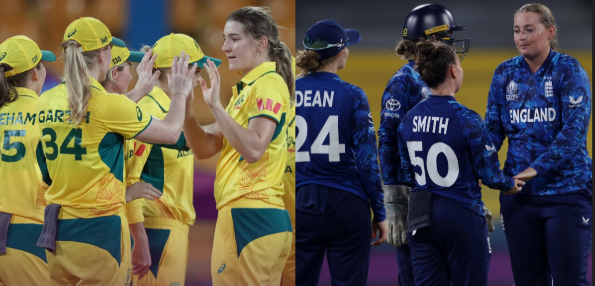
The Australia Women’s National Cricket Team vs England Women’s National Cricket Team stats tell the story of one of cricket’s most enduring and fiercely contested rivalries. From early low scoring encounters to modern high intensity clashes, every match has added a new layer of drama, skill, and emotion. This rivalry is not just about scorecards, it is about pride, legacy, and the constant battle for dominance. With iconic players, unforgettable moments, and shifting momentum across formats, Australia and England have built a contest that continues to captivate fans and define excellence in women’s cricket across generations.
Latest Matches
Tournament
Venue
Date
Toss
Australia Score
England Score
Result
Series
Player of the Match
ICC Women’s Cricket World Cup
Holkar Cricket Stadium, Indore
Oct 22, 2025
Australia Women (field)
248/4 (40.3 overs)
244/9 (50 overs)
Australia Women won by 6 wickets
World Cup
Annabel Sutherland (AUS)
Women’s Ashes Only Test
Melbourne Cricket Ground, Melbourne
Jan 30 – Feb 1, 2025
Australia Women (field)
440
170 & 148
Australia Women won by an innings and 122 runs
Women’s Ashes
Annabel Sutherland (AUS)
Women’s Ashes T20I
Manuka Oval, Canberra
Jan 23, 2025
England Women (field)
185/5 (20 overs)
168/4 (19.1 overs, DLS target 175)
Australia Women won by 6 runs (DLS)
Women’s Ashes
Tahlia McGrath (AUS)
Women’s Ashes T20I
Adelaide Oval, Adelaide
Jan 25, 2025
Australia Women (field)
162/5 (20 overs)
90 (17.3 overs)
Australia Women won by 72 runs
Women’s Ashes
Tahlia McGrath (AUS)
Women’s Ashes T20I
Sydney Cricket Ground, Sydney
Jan 20, 2025
Australia Women (field)
198/7 (20 overs)
141 (16 overs)
Australia Women won by 57 runs
Women’s Ashes
Annabel Sutherland (AUS)
Women’s Ashes ODI
Bellerive Oval, Hobart
Jan 17, 2025
Australia Women (field)
308/8 (50 overs)
222 (42.2 overs)
Australia Women won by 86 runs
Women’s Ashes
Annabel Sutherland (AUS)
Women’s Ashes ODI
Junction Oval, Melbourne
Jan 14, 2025
Australia Women (field)
206/6 (38.5 overs)
204 (50 overs)
Australia Women won by 4 wickets
Women’s Ashes
Tahlia McGrath (AUS)
All-Time Head-to-Head Summary
Format
Matches Played
Australia Women Wins
England Women Wins
Draws / Ties / No Result
Test
52
14
9
30 (Draws)
ODI
89
61
24
3 NR + 1 Tie
T20I
44
23
21
0
Overall
185
98
54
33
All-Time Batting Leaders
Rank
Player
Team
Matches
Innings
Runs
Average
Highest Score
100s
50s
1
Ellyse Perry
AUS-W
70
80
2,100
42
213
5
12
2
Nat Sciver-Brunt
ENG-W
60
70
1,900
35
148
4
10
3
Charlotte Edwards
ENG-W
60
70
1,800
32
120
3
11
4
Meg Lanning
AUS-W
45
50
1,650
48
127
5
9
5
Alyssa Healy
AUS-W
55
60
1,550
32
170
3
8
6
Beth Mooney
AUS-W
40
45
1,400
45
133
2
10
7
Heather Knight
ENG-W
55
60
1,350
30
106
2
7
All-Time Bowling Leaders
Rank
Player
Team
Matches
Wickets
Average
Economy
Best Figures
5-Wicket Hauls
1
Ellyse Perry
AUS-W
70
120
22.50
3.80
6/32
4
2
Katherine Sciver-Brunt
ENG-W
55
95
23.50
4.10
5/18
3
3
Megan Schutt
AUS-W
50
85
24.00
4.20
4/26
1
4
Sophie Ecclestone
ENG-W
35
70
21.50
4.80
5/27
2
5
Cathryn Fitzpatrick
AUS-W
30
65
18.50
3.20
5/14
3
6
Ashleigh Gardner
AUS-W
40
60
25.00
4.90
4/22
1
7
Lisa Sthalekar
AUS-W
35+
55+
22.80
4.10
4/20
1+
When the Rivalry First Took Shape on the International Stage
The rivalry between the Australia Women’s National Cricket Team and the England Women’s National Cricket Team began long before modern fame and packed stadiums, taking shape in an era when women’s cricket was still fighting for recognition and respect. Their first encounters in the early twentieth century were not just matches but statements of intent, as both sides carried pride and determination onto the field. Australia brought natural aggression and fearless stroke play, while England relied on discipline, patience, and traditional technique. These early contests were often low scoring but rich in tension, with every run hard earned and every wicket celebrated with passion. Players like Betty Archdale and Peggy Antonio quietly became pioneers, setting standards for future generations. The scorecards from those matches may not show explosive numbers, but they reflect resilience, strategy, and the birth of a historic rivalry. Fans who followed these games felt a growing connection, sensing that this was more than sport, it was the beginning of a long battle for supremacy that would evolve into one of cricket’s most respected rivalries.
Year
Venue
Winner
Key Player
Result Margin
1934
Brisbane
England Women
Betty Archdale
Won by 9 wickets
1935
Sydney
Australia Women
Peggy Antonio
Won by 98 runs
1937
Melbourne
England Women
Molly Hide
Won by 5 wickets
1948
Adelaide
Australia Women
Kath Smith
Won by 7 wickets
1951
London
England Women
Myrtle Maclagan
Won by 6 wickets
The Birth of Women’s Ashes and a Rivalry Finds Its Soul
The rivalry between the Australia Women’s National Cricket Team and the England Women’s National Cricket Team found its true identity with the birth of the Women’s Ashes, a contest inspired by the historic men’s rivalry but shaped with its own unique character and spirit. As the series evolved, it became more than just a set of matches, it turned into a symbol of pride, legacy, and fierce competition. Test cricket played a central role in the early Ashes battles, where patience, endurance, and tactical brilliance defined outcomes. Australia often entered as favorites with their attacking mindset, but England responded with structured gameplay and calculated strategies. Players like Rachael Heyhoe Flint and Lyn Larsen emerged as influential figures, guiding their teams through pressure moments and setting high standards. The scorecards from these encounters began to tell deeper stories, not just of runs and wickets, but of turning points, partnerships, and game changing spells. Fans slowly embraced the Women’s Ashes as a prestigious contest, and with every series, the rivalry grew stronger, richer, and more emotionally charged, laying the foundation for decades of unforgettable cricketing battles.
Year
Series Host
Winner
Key Player
Format Impact
1954
England
England Women
Myrtle Maclagan
Test dominance
1958
Australia
Australia Women
Faith Thomas
Bowling brilliance
1963
England
Drawn
Rachael Heyhoe Flint
All round impact
1972
Australia
Australia Women
Lyn Larsen
Batting strength
1976
England
England Women
Enid Bakewell
Match defining performance
Early Dominance and England’s Fight to Stay Relevant
As the Women’s Ashes rivalry moved into a more structured era, the Australia Women’s National Cricket Team began to stamp clear authority, building a reputation for consistency, fitness, and fearless cricket that often left England searching for answers. Australia’s batting line up grew stronger with technically sound yet aggressive players who could control long innings, while their bowlers maintained relentless accuracy that created constant pressure. England, on the other hand, faced a period where staying competitive required resilience and tactical reinvention. They were not outclassed without a fight, but scorecards often reflected Australia’s upper hand through bigger totals and tighter bowling spells. Still, England produced moments of defiance that kept the rivalry alive, with players like Enid Bakewell delivering all round performances that challenged Australian dominance. Matches during this phase were shaped by patience and mental strength, where even small partnerships or crucial wickets could shift momentum briefly. Fans witnessed a rivalry that was not one sided in spirit, even if results leaned towards Australia, as England’s determination ensured that every contest carried tension, pride, and the hope of turning the tide in future battles.
Year
Venue
Winner
Top Performer
Key Highlight
1978
Sydney
Australia Women
Sharon Tredrea
Strong bowling spell
1982
London
Australia Women
Jill Kennare
Crucial century
1984
Adelaide
Australia Women
Denise Annetts
Dominant batting
1987
Manchester
England Women
Enid Bakewell
All round brilliance
1989
Melbourne
Australia Women
Lyn Fullston
Match winning spell
The Rise of Competitive Balance in One Day Cricket
The introduction of One Day Internationals brought a fresh dimension to the rivalry between the Australia Women’s National Cricket Team and the England Women’s National Cricket Team, shifting the balance from long format patience to strategic aggression and adaptability. Unlike Test matches, ODIs demanded quicker decision making, sharper fielding, and the ability to handle pressure in limited overs, which allowed England to gradually close the gap that Australia had built over the years. England began to produce more confident batting performances, building competitive totals and challenging Australia’s bowlers with calculated risks. At the same time, Australia continued to showcase depth and consistency, ensuring that matches remained fiercely contested. Scorecards from this era started reflecting tighter margins, with games often decided in the final overs rather than by dominant innings. Players like Belinda Clark and Charlotte Edwards became central figures, guiding their teams through evolving match situations. Fans witnessed a rivalry that was no longer predictable, as each encounter carried uncertainty, intensity, and growing excitement, marking the true beginning of a balanced and gripping contest in women’s cricket.
Year
Venue
Winner
Top Performer
Match Result
1997
Derby
Australia Women
Belinda Clark
Won by 6 wickets
2000
Sydney
England Women
Charlotte Edwards
Won by 4 wickets
2005
Bristol
England Women
Clare Connor
Won by 3 wickets
2009
Sydney
England Women
Claire Taylor
Won by 7 wickets
2013
Mumbai
Australia Women
Meg Lanning
Won by 9 runs
World Cup Encounters That Raised the Stakes
When the Australia Women’s National Cricket Team and the England Women’s National Cricket Team met on the World Cup stage, the rivalry transformed into something far more intense, where every ball carried the weight of global expectations and every mistake could end a tournament dream. Unlike bilateral series, World Cup matches brought pressure, nerves, and the hunger to perform under the biggest spotlight in women’s cricket. Australia often entered as a dominant force with a powerful batting lineup and disciplined bowling attack, but England repeatedly showed resilience, producing performances that challenged the narrative. Scorecards from these clashes began to reflect high quality cricket, with competitive totals, crucial partnerships, and match defining spells. Players like Meg Lanning and Sarah Taylor became central to these battles, delivering under pressure and shaping outcomes with their skill and composure. Fans witnessed unforgettable moments, from tense chases to sudden collapses, as the rivalry reached new emotional heights. These encounters did not just decide matches, they influenced tournament paths and strengthened the legacy of one of cricket’s most compelling rivalries.
Year
Venue
Winner
Top Performer
Match Result
2009
Sydney
England Women
Claire Taylor
Won by 4 wickets
2013
Mumbai
Australia Women
Meg Lanning
Won by 3 wickets
2017
London
England Women
Anya Shrubsole
Won by 9 runs
2022
Christchurch
Australia Women
Alyssa Healy
Won by 71 runs
2023
Cape Town
Australia Women
Ashleigh Gardner
Won by 6 wickets
T20 Era Sparks New Energy and Aggression
The arrival of T20 cricket completely transformed the rivalry between the Australia Women’s National Cricket Team and the England Women’s National Cricket Team, injecting it with pace, aggression, and a fearless brand of cricket that redefined how these teams approached the game. Unlike the measured rhythm of Tests and the calculated balance of ODIs, T20 matches demanded instant impact, bold shot selection, and relentless pressure from the very first ball. Australia quickly adapted with explosive batters who could dominate powerplays and accelerate in the death overs, while England responded with innovative strategies, sharp fielding, and versatile all rounders who thrived under pressure. Scorecards in this format began to showcase rapid scoring rates, dramatic collapses, and thrilling finishes that often went down to the final over. Players like Ellyse Perry and Nat Sciver Brunt became central figures, delivering match winning performances with both bat and ball. Fans were drawn into a high intensity spectacle where momentum shifted rapidly, making every encounter unpredictable and emotionally charged, as the rivalry entered a new era defined by energy, aggression, and constant excitement.
Year
Venue
Winner
Top Performer
Match Result
2010
Sydney
Australia Women
Ellyse Perry
Won by 5 wickets
2014
Chelmsford
England Women
Sarah Taylor
Won by 3 wickets
2017
Bristol
England Women
Heather Knight
Won by 4 runs
2020
Melbourne
Australia Women
Alyssa Healy
Won by 85 runs
2023
The Oval
Australia Women
Beth Mooney
Won by 6 wickets
Iconic Player Battles That Added Fire to the Rivalry
Beyond team results and scorecards, the rivalry between the Australia Women’s National Cricket Team and the England Women’s National Cricket Team has always been fueled by intense individual battles that brought emotion, pride, and psychological edge to every encounter. These were not just contests of skill but moments where reputations were built and legacies defined. The face offs between Ellyse Perry and Nat Sciver Brunt often turned into all round duels, with both players influencing matches with bat and ball under immense pressure. Meg Lanning’s calm authority at the crease frequently clashed with England’s disciplined bowling attack led by Katherine Brunt, creating moments where patience met aggression. Wicketkeepers like Sarah Taylor added another layer, with sharp glovework and crucial runs that shifted momentum. These battles were not always loud but deeply competitive, with subtle sledging, intense focus, and high stakes decisions shaping outcomes. Fans followed these individual contests closely, knowing that one key duel could decide the match. Over time, these player rivalries became the heartbeat of the larger contest, adding depth, drama, and unforgettable moments to an already historic cricketing rivalry.
Player Battle
Team A Player
Team B Player
Key Strength
Impact
Bat vs All Round
Ellyse Perry
Nat Sciver Brunt
Balance and control
Match defining spells
Captaincy Clash
Meg Lanning
Heather Knight
Tactical leadership
Pressure decisions
Pace Duel
Megan Schutt
Katherine Brunt
Swing and accuracy
Early breakthroughs
Keeper Impact
Alyssa Healy
Sarah Taylor
Aggressive batting
Momentum shifts
Spin Battle
Jess Jonassen
Sophie Ecclestone
Control and variation
Middle overs dominance
Conclusion
The Australia Women’s National Cricket Team vs England Women’s National Cricket Team stats reflect a rivalry that has grown stronger with time, evolving through different eras and formats while maintaining its competitive edge. From historic Tests to thrilling T20 finishes, each encounter has contributed to a rich legacy filled with records, rivalries, and defining moments. Both teams have pushed each other to greater heights, creating matches that are remembered for their intensity and quality. As new players emerge and the game continues to evolve, this rivalry remains a benchmark of excellence and a true showcase of women’s cricket at its finest.